Two الخراطة باستخدام الحاسب الآلي suppliers can quote the same drawing and offer different deliverables. One may include cross-drilling, anodizing, and measured results for the critical bore. The other may quote the same part number with machining only and standard inspection. Both prices can be valid. You can compare them once you know what each supplier will make, measure, document, and deliver.
Start with the drawing and the conditions under which you’ll accept the parts. A supplier’s published capabilities can help you shortlist shops, while a written review of your drawing tells you whether those capabilities apply to your material, geometry, order quantity, and delivery schedule. The difference matters even within one supplier. Published turning limits, inspection options, and available secondary processes can vary between its own factories and its manufacturing network. [Protolabs CNC Machining]
1. Machining Range and Setup Capability
Machining range refers to the diameters, lengths, materials, and features a supplier can produce using the equipment and setups assigned to your part.
Maximum diameter and length are useful first checks. Protolabs, for example, lists turning limits of 3.95 in. in diameter and 9 in. in length for its factory route, compared with 17 in. in diameter and 39 in. in length for its network route. These are published limits for two routes from one provider. Its turning design guide also directs buyers to material-specific size limits. A part that fits the headline dimensions still needs a review of its geometry, material, and workholding. [Protolabs CNC Machining] [Protolabs CNC Turning Design Guidelines]
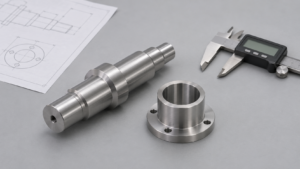
Take an illustrative 35 mm diameter × 180 mm long stainless steel shaft with two bearing seats, an external thread, and a cross-hole. Its overall dimensions fit the published factory limits above. The useful questions come next. How will the shop support the shaft during cutting? Will it turn both bearing seats from the same setup? How will it locate the cross-hole relative to the shoulder? The answers tell you more about the supplier’s ability to hold the drawing than the machine’s maximum swing.
Live tooling expands what a lathe can do. It uses powered tools to drill or mill features such as radial holes, flats, and slots. For a shaft with a cross-hole referenced to a turned diameter, keeping the work in the same setup may reduce handling and simplify location. A shop can also use a separate mill with suitable fixturing and inspection. Ask how it will establish the drawing datum after transferring the part and how it will verify the feature that depends on that datum. [Protolabs CNC Turning]
The right setup also depends on quantity. For a small order, a shop may quote conventional turning followed by a milling operation because it already has suitable fixtures. On recurring orders, a combined setup may save handling time and help keep batches consistent. Ask for the planned sequence at your actual release quantity, especially if the first order is a small pilot and the production releases will be larger. Features that merit a closer look include thin walls, deep bores, long unsupported sections, and holes or flats located from a turned surface.
الإجراء: Send the drawing and order quantity, then ask each supplier to identify the proposed setup sequence, the features that require a transfer, and how it will hold the drawing datums through that transfer.
2. Tolerances and Batch Repeatability
Tolerance capability refers to the dimensional and geometric limits a supplier can commit to on specified features, at the ordered quantity and in the required delivery condition.
A tolerance published on a website needs context. One Protolabs machining guide lists a possible tolerance of ±0.0005 in. (±0.0127 mm) for a specified hole or bore under one service route. The important detail is its scope. It applies to a specified feature and describes a possible capability. For a live RFQ, ask the supplier to confirm the exact feature, material, size, and delivery condition before treating that figure as part of the quote. [Protolabs Prototyping to Production]
Consider an illustrative bushing with a 20.000–20.021 mm bore و 0.03 mm total runout on the outside diameter relative to the bore datum. The bore’s entire size window is 21 μm. A reading inside that window answers the size question. The runout callout needs its own datum setup and measurement. Ask the supplier to explain how it will verify both requirements and record the results. If the bore is the assembly interface, tell the supplier what contacts it and which dimensions control that fit. That helps the shop direct its effort where variation affects the assembly.
Also state when acceptance applies. If the drawing calls for anodizing, plating, heat treatment, or grinding, identify the features that must conform after the last operation. A shop may quote the bore in the as-machined condition unless the finish requirement and final acceptance dimensions are clear. If the part needs masking or post-finish machining, the supplier should price and schedule that work explicitly. When a tolerance is flexible, ask engineering to review it and issue an approved revision before the shop produces to a wider limit.
Batch repeatability becomes more important when you move from samples to regular releases. A passing sample gives you evidence about that piece. For a recurring order, ask how the shop checks the process during production. On an illustrative 1,000-piece run, you might agree to verify the bearing seat at setup, after an insert change, and at defined intervals, with a separate final inspection plan. Ask what happens when a reading falls outside the limit, including how the shop identifies and contains parts produced since the last acceptable reading. For a recurring critical feature, measured results from a representative pilot batch can help you judge how much variation to expect.
الإجراء: Mark each critical feature on the drawing and have the supplier confirm its tolerance, measurement method, inspection stage, and production checks in writing.
3. Inspection and the Evidence You Receive
Inspection scope refers to the characteristics a supplier checks, the number of parts it checks, the methods it uses, and the records it provides with the order.
“Inspected” can describe several different deliverables. Protolabs’ CNC inspection menu describes a standard option that checks parts and provides no measurement results. A dimensional report option covers approximately 10 dimensions and excludes geometric dimensioning and tolerancing, or GD&T. Its listed first article inspection covers 100% of drawing dimensions on the sample part, including GD&T, and lists one additional day of lead time. These are examples from one provider’s published menu. Confirm what the report includes for your quote and facility. [Protolabs Inspection Reports]
The phrase “100% inspection” deserves a follow-up. It may mean every feature on one first article, or a specific feature on every piece in the lot. For example, a buyer may want a first article report for all drawing characteristics and a production check on every piece for one bore that controls assembly. Put both requirements in the RFQ. Give the supplier the drawing characteristic number, lot size, inspection frequency, and reporting format. If you want numerical readings for sampled parts and only pass/fail results for the full-lot screening, state that distinction.
Match the inspection method to the acceptance question. A suitable plug gauge can screen a bore against agreed limits. A bore gauge can provide numeric readings. A coordinate measuring machine, or CMM, may help verify positional features or relationships to datums when the measurement setup suits the geometry. If you buy a CMM report, specify the features and datum references you need documented. A material test report serves a different purpose. If your project needs material traceability, specify the required certificate and how the supplier should link the material heat or batch to the parts delivered. A certificate of conformance can accompany those records as a declaration against the agreed requirements. [Protolabs Network Quality Assurance] [Protolabs Inspection Reports]
Ask for a blank or redacted sample report before you award a recurring order. Check whether it identifies the part number, drawing revision, lot, and characteristic numbers. Make sure your receiving team can match the readings to the drawing without guessing which surfaces were measured. Decide when results must arrive. A first article report reviewed before the production release gives you a chance to resolve discrepancies early. A final report sent with the packing documents supports receiving inspection and lot release.
الإجراء: Put the feature list, sample size, measurement method, report format, traceability documents, and report due date into the RFQ and purchase order.
4. Secondary Operations and Finished-Part Responsibility
Secondary operation scope refers to the work performed after primary turning and the party responsible for delivering parts in the specified finished condition.
A turned part may also need deburring, grinding, passivation, anodizing, marking, or assembly. A supplier may perform some operations on site and use specialist shops for others. Published production capabilities illustrate how finishing, assembly, and quality documentation can appear as distinct offerings. Confirm each line item against your drawing and quote so you know which work the supplier has priced. [Protolabs Production CNC Machining]
Take an illustrative aluminum collar with an anodized exterior, a 25 mm bearing bore, and a threaded hole. The buyer needs the finished collar to fit the bearing and accept the mating screw. The RFQ should identify coated and masked surfaces, where applicable, and call out which dimensions will be accepted after finishing. The supplier can then quote the required preparation, masking, final checks, and packaging. Without that detail, a low turning quote may leave the buyer coordinating the finish shop, transport between shops, and incoming checks after the parts come back.
Outsourcing can make sense when a specialist already runs the required process and can provide the records you need. The practical question is who controls the handoff. Ask who sends the correct drawing revision to the processor, tracks the lots in transit, and performs final inspection after the parts return. If the finished bore fails, establish who investigates, replaces the lot, and pays for repeat finishing and transport under the agreed terms. If you nominate your own processor, spell out where the turning supplier’s acceptance responsibility ends and what checks you need at that handoff.
Verify certification against the order when your customer or quality system requires it. A supplier or network may list ISO 9001:2015, ISO 13485:2016, or AS9100D in its quality materials. Ask for the certificate and scope applicable to the site performing the work. If the order calls for an approved special processor or a lot-specific record, request that evidence separately. Get the manufacturing and processing locations agreed before releasing the order when your requirements depend on a particular site or approval. [Protolabs Network Quality Assurance]
Packaging also belongs in the finished-part scope. A part with an exposed precision journal, a cosmetic surface, or a fine external thread may need individual protection. If a supplier splits a shipment, agree how lot labels and inspection records will follow each carton. These details are straightforward to price up front and harder to reconstruct after a mixed-lot delivery.
الإجراء: List each secondary operation, its acceptance criteria, and its required records, then name the party that will release and replace finished parts if they fail acceptance.
5. Delivery Model and Total Delivered Cost
Delivery model refers to who reviews the drawing, manufactures and inspects the part, manages shipping, and owns the response if the order arrives late or fails acceptance.
A direct machine shop can give you ready access to the people who planned the work. A manufacturing network can give you access to more machine sizes, specialists, and production capacity. Either arrangement can work if responsibilities are clear. As one example, Protolabs describes dimensional and visual checks during and after production across its network. Ask your candidate supplier who conducts those checks for your order, who approves a site change, and whether a change triggers a new first article or other approval. [Protolabs Network Quality Assurance]
The local-versus-overseas decision depends on how the order will run. A local supplier can be easier to visit and may shorten feedback cycles during a design revision. An overseas supplier may offer a better delivered cost on stable releases or access to a process that is hard to source locally. For both routes, compare the date the parts need to be available at your receiving location. Include drawing approval, material sourcing, production, finishing, inspection, transit, and clearance where applicable. Confirm which milestone the quoted lead time covers and who owns each remaining step. [Runsom Precision, Global vs. Local CNC Machining Suppliers]
Here’s an illustrative comparison for 500 parts. Supplier A quotes $6.20 per part delivered, including the agreed inspection report, for a total of $3,100. Supplier B quotes $5.10 per part, plus $180 for the report and $420 for freight, brokerage, and applicable import charges. That brings Supplier B to $3,150 under the stated assumptions. The lower unit price resulted in a $50 higher delivered quote. Now ask what happens if either shipment contains rejected parts. If you have to fund expedited replacements or an emergency sort, the purchase cost per usable part can rise even when the original quote covered freight.
[Author’s first-person observation to complete before publication. “I sent the same revision of a [part type] drawing to [number] suppliers for [quantity] pieces. I asked each supplier to quote [critical feature, finish, and inspection evidence]. The biggest difference I found was [verified difference]. After I put both quotes on the same delivery basis, [actual price, lead-time, or scope difference]. Based on that result, I [decision you made].”]
Send every supplier the same RFQ package. Include the drawing revision, material and condition, order quantity and release schedule, critical dimensions, approved finish, inspection records, traceability, delivery destination, and required arrival date. Have suppliers list exclusions and requested deviations beside the relevant requirement. If a quote assumes a different material, inspection plan, or process, ask for a separate price for building to the original specification. That gives you a usable comparison and a clear record of what your purchase order needs to carry forward.
الإجراء: Compare written quotes at the same delivery point, with the same acceptance criteria and documentation, and confirm who pays for sorting, replacement, and expedited freight if a lot fails.
الأسئلة الشائعة
A: Send a revision-controlled drawing, the 3D model if available, the material grade and condition, quantities, critical dimensions, finish requirements, and required inspection documents. Include the delivery destination and the date you need usable parts. If the drawing and model conflict, identify which file controls and have the supplier flag discrepancies before quoting.
A: Ask for a written commitment for the exact bore in the specified material and final condition. Confirm how the supplier will measure it, how often it will check during production, and what evidence you will receive. For a repeat order, request pilot-batch measurements from a process representative of production.
A: Live tooling can bring features such as cross-holes, flats, and slots into the lathe setup. The result depends on access, feature size, orientation, workholding, and the machine’s configuration. Ask which features will be cut in the same setup and how the shop will inspect any features produced after a transfer.
A: Choose a first article inspection when you need documented verification against the drawing before releasing production. Choose a dimensional report when you need measured results for an agreed set of characteristics. Confirm feature coverage, sample quantity, and any GD&T requirements before ordering either report.
A: A direct factory can be a good fit when you need close contact with the production team or approval of a specific site. A network can be a good fit when the part needs several capabilities or extra capacity. Ask both who will make the part, who will inspect it, and who will handle a rejected lot
A: Compare the cost of receiving an accepted lot at the same destination. Include machining, finishing, reporting, packaging, freight, and applicable import charges. Compare arrival dates and replacement timelines as well. A cost difference that works for planned replenishment may disappear when a rejected batch holds up assembly.